


One photo, two memories

Open the date card at full size
What do you remember that isn’t in this picture?
Pull up an old photo together. Maybe it’s the night you ate pizza on the floor of your first apartment. You remember the pizza being cold. Your partner remembers being too happy to care. You were both there, but you get to hear their side of that night for the first time.
Take turns telling one detail outside the frame. Then ask, “Which part would you like to do again?” If you don’t have the photo, start with “Do you remember when…?” Adapted from The Old Photos Date, p. 99.

The invitation you almost skipped
Your spouse once told you they hated dancing. Years later, a song comes on in the kitchen and you nearly let it play out. What if what they hated was a room full of people watching? The two of you in socks might get a different answer. You could hold out your hand and find out.
“A marriage can feel stale simply because we keep talking to an outdated version of each other.” Chapter 2, p. 10
Two more invitations for this week: Take a walk with no errands and let each other choose the turns. Or make breakfast for dinner and play a song you remember from when you met.
When “yes” still isn’t what you hoped to hear
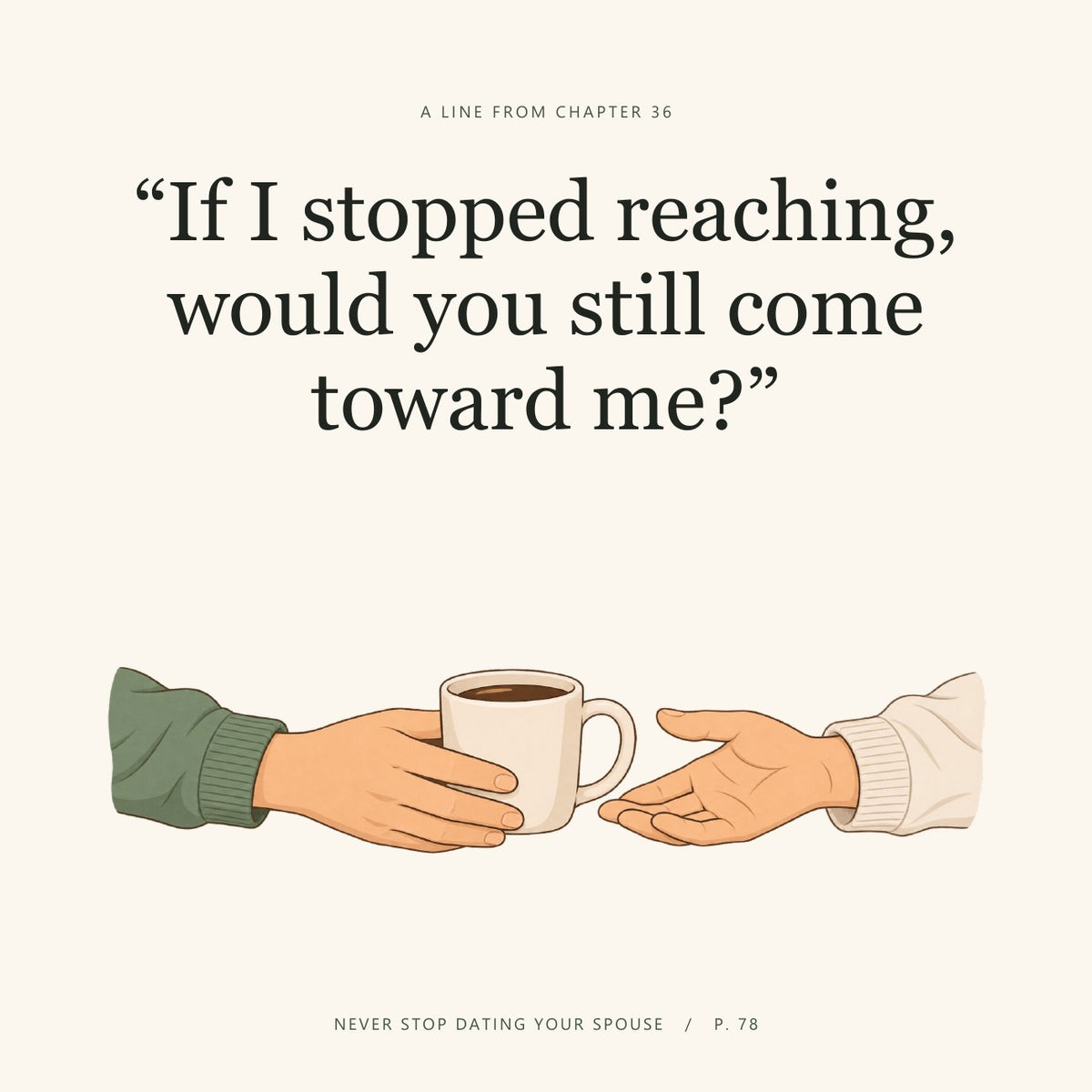
You suggest a walk after dinner. Your partner gets their coat. It should feel good, so why does it sting a little? Maybe you didn’t need a more enthusiastic yes. Maybe, just once, you wanted them to be the one who asked.
The person may stop asking not because they no longer want closeness, but because they want evidence that they are wanted without having to request it.
Chapter 36 · The One Who Always Initiates · p. 78
The book offers a way to say it before it becomes a silent test: “I need you to initiate sometimes because it helps me feel chosen.”
Read three free excerpts: being asked, sharing the remembering, and taking a pause
Explore seven more illustrated ideas from the book

The work starts before the laundry does.
If one of you spots the empty drawer, sorts the clothes and asks the other to run a load, the wash is shared. The remembering still belongs to one person. Pick one recurring job and take responsibility for noticing, planning and finishing it.
From the book: “They are tired from being the person who keeps the map in their head.” (p. 22)

What became ordinary because someone kept doing it?
Think of something your partner does so reliably that you only notice when it stops. Tell them what it made possible today. You can appreciate the coffee and still have a separate, honest talk about who washes up.
From the book: “The first time someone makes you coffee exactly the way you like it, it can feel intimate. The five-hundredth time, it can become part of the furniture.” (p. 12)

Leave the next move up to them.
After a day of being needed, even a loving touch can feel like another request. Ask whether they would like a hug, company or a little room. If they choose a hug, let it end there.
From the book: “Sometimes the most intimate touch is the one that asks for nothing afterward.” (p. 19)

Which part do you actually regret?
Imagine that you are still upset about a missed pickup. You can own the way you spoke without withdrawing the request. Come back to the pickup after you have dealt with the sharp words.
From the book: “I am still frustrated, but I do not want to talk to you like that.” (p. 24)

Let an unfinished thought into the conversation.
Your partner mentions changing careers. Before either of you has to defend a decision, ask what first drew them to it. You can listen to their answer and still have questions about the rent.
From the book, p. 40: “I want to understand why this matters to you” is not the same as “yes.”

One of you remembers teamwork. The other remembers being alone.
Both can be telling the truth about the same months. A question from the book makes room for the part you could not see. Let the answer stand before offering your own version.
From the book: “What did that season cost you that I may not fully understand?” (p. 69)

Start with the morning, before you make a bucket list.
Where are you when you wake up? Who makes breakfast? What is there finally time for? Each describe a Saturday worth getting older for. See if one small part of it belongs in this weekend.
From the book: “What would your ideal ordinary Saturday look like ten years from now?” (p. 107)
What you’ll find inside
- 45 short chapters on shared responsibilities, affection, repair, friendship, and the ways a partnership changes through caregiving, illness and an empty nest.
- 70 easy date ideas for different budgets and energy levels, from a takeaway tasting on the floor to a drive with two coffees.
- 50 conversation starters you can open at random and read aloud. Try “What would your ideal ordinary Saturday look like ten years from now?”
Written for adults in committed relationships, married or unmarried, with or without children. Read it alone, trade a marked passage, or pick a chapter together. The suggestions assume both partners feel safe and can freely say yes or no.
Questions about the ebook
How do I get my copy?
Your purchase is a downloadable PDF. The download link is emailed to the address you enter at checkout. Save the file to read on a phone, tablet or computer.
Can I read this on my own?
Yes. It’s a reading book. You can start with the chapter that fits your day, try a question, or share a passage when you both want to.
Do the dates need a sitter or a big budget?
Many take place at home or on an errand. The Couch Date needs a snack, a blanket and a little time together. Choose one that fits your energy and budget.
What if I need help with my order?
Check your inbox and spam folder. For download help or a refund question, contact Easy Drawing Ideas with your order number.