


When your child blames the dog
A cushion hits the tablet. Your nine-year-old says the dog did it. You saw what happened. What would you say first?

You already know who did it
“Did you do it?” gives your child a chance to deny it again. Start with what you saw. Later, give them a way to come back and correct the story, even if the tablet still needs fixing.
Words to practise together
Your child can say, “I need to tell you that differently.”
You can answer, “Thank you for coming back to tell me. Let’s understand what happened.”
Chapter 15 · pp. 88–91

Whose turn is it to share?
Asha has spent an hour building a miniature house. Her little brother reaches in and knocks over a room. She shoves his hand. Their mother checks his hand, then learns this happens every time Asha builds. Where can her daughter leave a room half-finished?
They put the house on a tray on a higher shelf. Ben gets his own blocks. Later, Asha offers to show Ben one room. When she turns down a hug, her mother accepts her answer.
Chapter 17 · pp. 99–100
Would your teenager call you for a ride?
Sixteen-year-old Aisha comes home forty minutes late. Her ride fell through. The next day her parent wonders whether their usual reaction made it harder for Aisha to call. Together they plan a backup ride and agree the lecture can wait until she’s home safe.
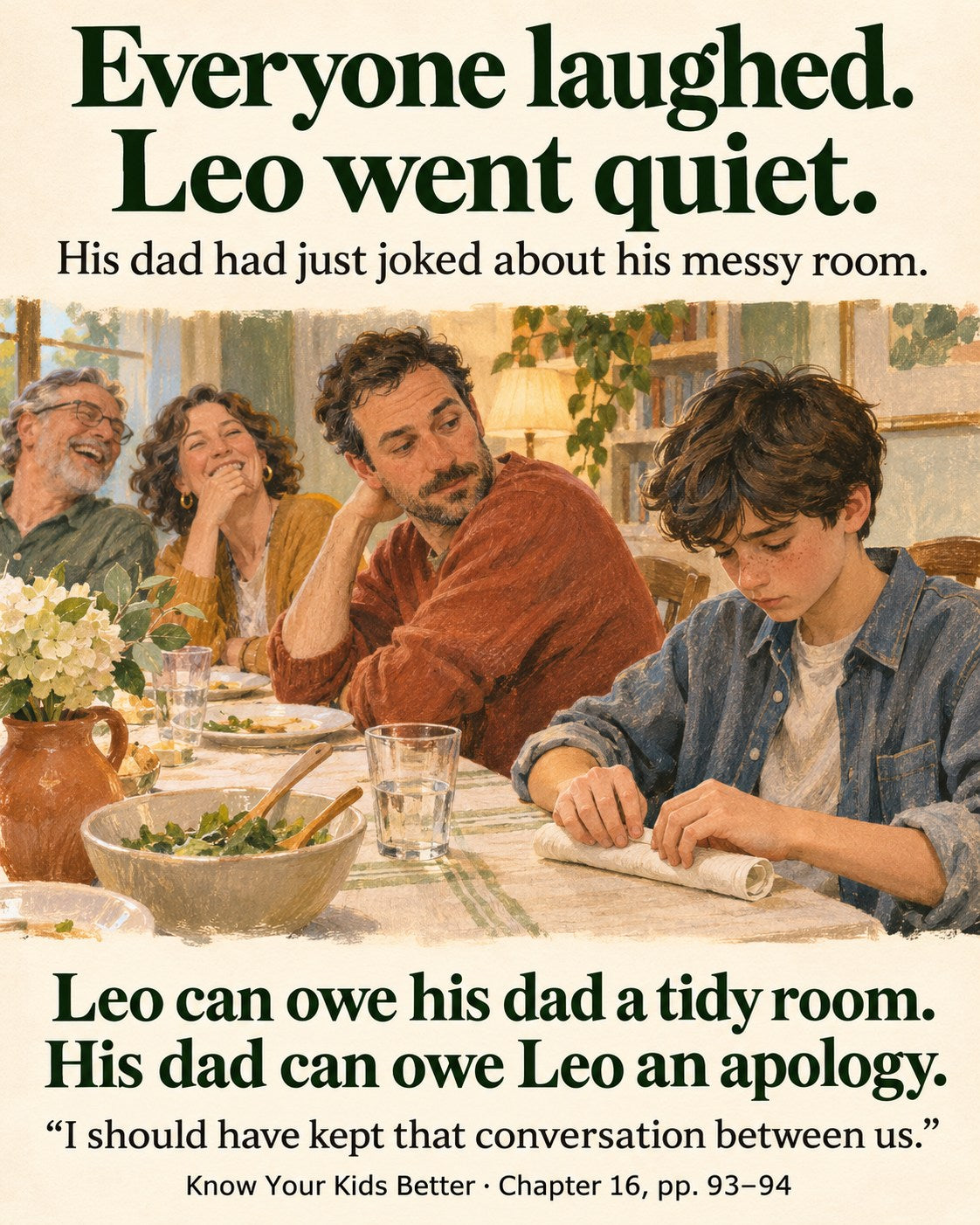
Read all three passages in the book’s own words
See seven more illustrated situations from the guide


Choose the chapter your family needs today
The 30 chapters cover early childhood through adolescence. Open the clickable contents to jump to play and routines, friendships and school, online privacy, or helping a teenager ask for a ride home.
- Before a hard conversation — use the conversation planner on pages 194–195 to decide what you want to ask and what can wait.
- At the end of the week — try the check-in on pages 196–197 and agree on one change to test together.
- Before a school meeting — use the record on page 198 to gather examples, note who will act, and set a date to follow up.
About the guide
Available from Easy Drawing Ideas in Niagara Falls, Canada, Know Your Kids Better uses fictional family stories, conversations, and optional activities to explore how adults and children listen to one another. A drawing is one way a child can share an idea in their own words. References for further reading begin on page 199.
Questions about the ebook
How do I get my PDF?
After payment, a download link is sent to the email address you use at checkout. Save the PDF to read offline on your phone, tablet, or computer. You can use the link again when you need another copy.
Which ages does the guide cover?
The book is written for parents and caregivers. It starts in early childhood and follows children through the teen years. Use the clickable contents to open the chapter that fits your family today.
How do I use the planning pages?
Choose a prompt for a conversation, a school meeting, or your weekly check-in. Write your answers in a notebook or print the pages you want to use.
What if my link is missing or I need a refund?
Check the inbox and spam folder for the address used at checkout. If you need help with access or want to ask about a refund, contact Easy Drawing Ideas with your order number.